

When cinematic history tallies up its most heavy-handed cautionary tales against substance abuse, it usually points to well-intentioned PSA melodramas and after-school specials. But true film freaks know that the absolute greatest, most delightfully unhinged anti-drug movie ever made is Frank Henenlotter’s 1988 midnight-movie masterpiece, Brain Damage. If you need a cinematic intervention that involves a talking, blue, phallic-shaped parasitic creature named Elmer who squirts hallucinogenic “blue juice” directly into your brain stem while demanding fresh human victims in return, look no further. Crack is whack, kids—and so is letting a singing, tap-dancing puppet ruin your entire life.
The Greatest (and Most Unhinged) Anti-Drug Movie Ever Made
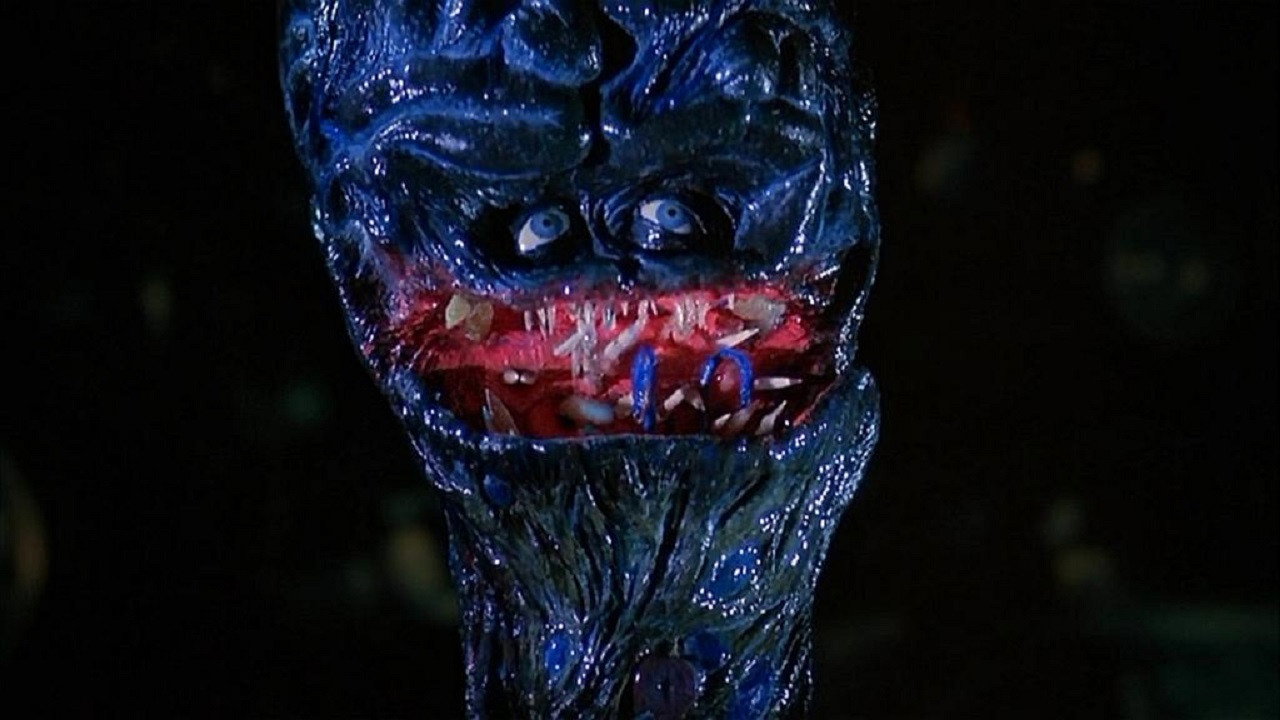
Let’s break down the sheer pedagogical brilliance of Henenlotter’s allegory. You wake up one morning to find a small, slimy creature attached to the base of your neck. He offers you a state of pure, technicolor euphoria. Everything is vibrant. You see colors in junkyards that defy human comprehension. You are obsessed day and night. But what happens when you try to go cold turkey? You start foaming at the mouth, trashing your apartment, and hallucinating so hard that your ears, blood, and chunks of gore literally fall out of your head.
As if experiencing severe, life-threatening withdrawals isn’t punishment enough, your addiction also alienates your girlfriend—who promptly runs off into the arms of your sleazy brother—and forces you into a third-act murder spree where you wake up covered in gore with zero memory of whose brains Elmer just snacked on. Nancy Reagan probably should have funded this picture. It’s an explicit, undeniable metaphor for the destructive cycle of chemical dependency, wrapped neatly in the gooey trappings of 80s B-movie schlock.
Practical Effects, Gritty New York, and the Church of Aylmer
Like Henenlotter’s legendary debut Basket Case and the later sleaze-comedy triumph Franken Hooker, Brain Damage operates as a vehicle designed to showcase incredible, tactile practical special effects. The entire narrative hinges on Elmer, a creature that looks like a cross between a rubbery dildo and a nostalgic 1980s McDonald’s chicken McNugget puppet, voiced with oily, smooth-talking charm by horror host John Zacherle. If the creature effect fails, the movie crumbles. Fortunately, Elmer is a triumph of independent creature design.
The film is also thoroughly rooted in the glorious, pre-Giuliani toilet bowl that was late-1980s New York City. This isn’t the sanitized, Mickey Mouse-store version of Manhattan; it’s a grimy urban hellscape where an unassuming young man named Brian (played by Rick Hearst) can stumble out of an Italian restaurant mid-hallucination—mistaking his spaghetti and meatballs for pulsating human brains—and wander straight into a seedy punk rock club where metal-head girls find Armani suits and total psychological detachment to be the peak of cool.
Cold Turkey, Bathtub Blues, and the Legacy of Cult Schlock
One of the most astonishing stretches of the film involves Brian locking himself in his bathroom for days, attempting to kick the blue juice habit while bathing with his parasitic tormentor. There is something profoundly surreal about watching a grown man splash around in soap bubbles, having fun-time bonding moments with a singing, dancing blue phallus that controls his every waking impulse. When the withdrawals finally peak, Brian attempts to yank a strand of his own brain out, ripping his ear off in a spray of practical gore while Elmer cheerfully reminds him that he’s losing his head.
Sure, the narrative logic stretches credibility. Yes, the supporting characters make baffling choices, like following a sweating, unhinged tweaker into the subway after he explicitly threatens to eat their brains. And yes, the final shot of Brian standing in an alley with a gaping hole and a literal flashlight beam shining directly out of his cranium is pure, unadulterated madness. But that is precisely why Brain Damage endures.
It is a greasy hamburger following a gourmet meal—a fast-paced, 82-minute blast of practical effects, dark humor, and bodily fluids that never overstays its welcome. It may not be high art, but it is an essential text for horror freaks and fans of underground genre cinema. So the next time someone offers you a mysterious blue substance, remember the cautionary tale of Brian and Elmer. Just say no.